Specialized Agent Architectures Replace Generalist Models in Enterprise Operations
Enterprise AI efficacy depends on decomposing workflows into role-based agent architectures rather than relying on omniscient, generalist models. This shift from monolithic assistants to bounded, specialized workers enhances security governance, auditability, and operational precision.
The Flaw of the Generalist Agent
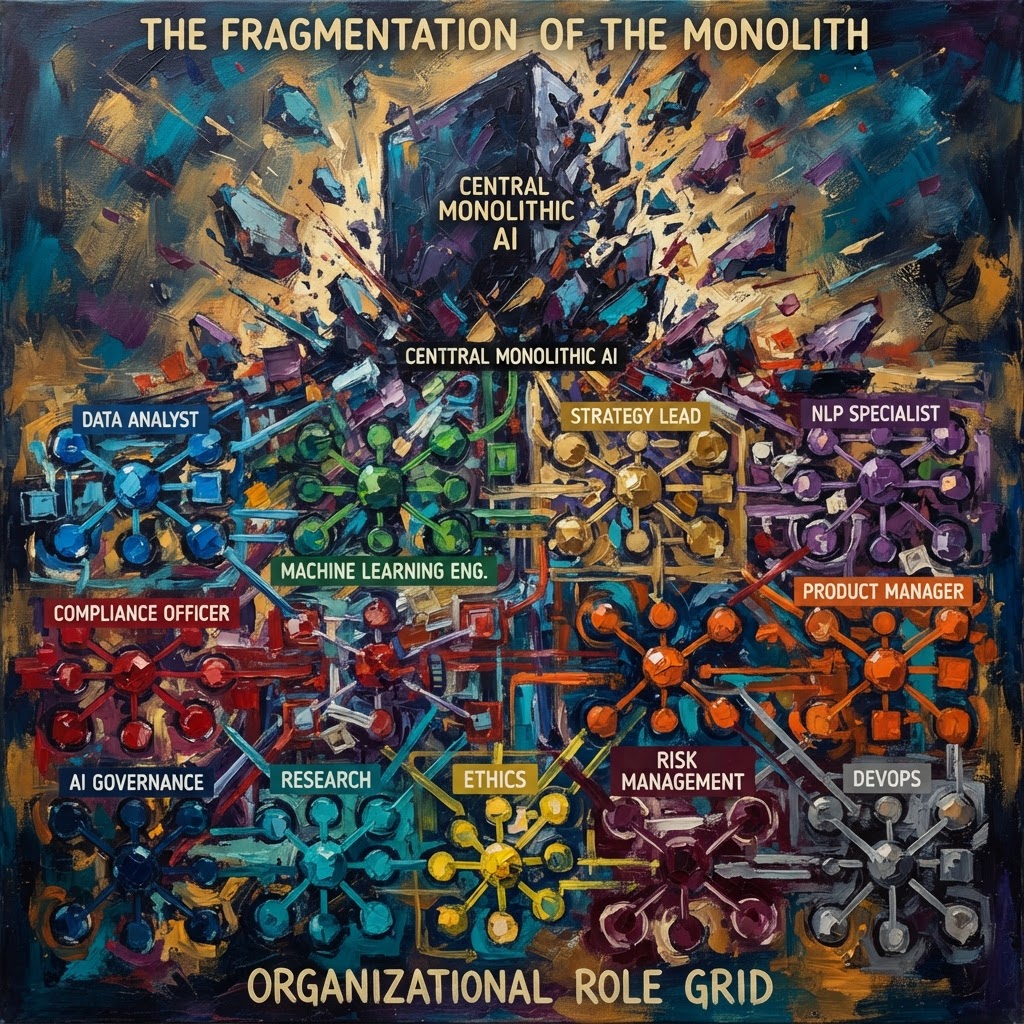
The initial wave of enterprise AI adoption centered on the concept of the omniscient assistant. The architectural pattern was straightforward: a massive foundation model, a sprawling set of tools, and a massive context window intended to hold the entire state of an organization. This approach is conceptually simple to pitch, but it fails under the weight of real-world operational complexity. In production environments, an agent that can do everything is an agent that cannot be safely controlled.
Operational work is rarely a singular task performed by a generalist. It is a sequence of highly specialized functions that require distinct permissions, specific data inputs, and unique error handling. When an agent is designed to be a generalist, it inherits the liabilities of every task it is authorized to perform. By contrast, designing agents as specific roles mirrors the successful structure of human organizations, creating inherent safety boundaries and clearer performance metrics.
Decomposition as a Security Boundary
The greatest challenge in enterprise AI is not performance, but governance. If a single agent has the authority to run threat hunts, modify security rules, and isolate infrastructure components, a failure in the model's logic or a prompt injection vulnerability becomes a catastrophic system risk. The potential blast radius is simply too large.
Specialization solves this by creating a security boundary around individual workers. In a role-based architecture, a detection tuning worker might have read access to alert logs and write access to configuration files for specific rules, but it lacks the authority to isolate network endpoints. An endpoint response worker, conversely, might have the authority to isolate hosts but only under strict human approval protocols. This approach turns governance into a configuration problem rather than a trust problem. You are no longer managing an intelligent agent that might act unpredictably. You are managing a set of software components with hardened, limited interfaces.
Establishing Operational Contracts
A useful enterprise agent needs a formal job description that acts as a contract between the software and the model. This contract defines inputs, allowed tools, permitted actions, and escalation triggers. When we move away from the prompt, Be a helpful security analyst, and toward a system where the agent is explicitly instructed that its role is only to correlate logs and generate evidence reports, we achieve two things. First, the model performs better because the search space for its reasoning is narrowed. Second, the system becomes auditable.
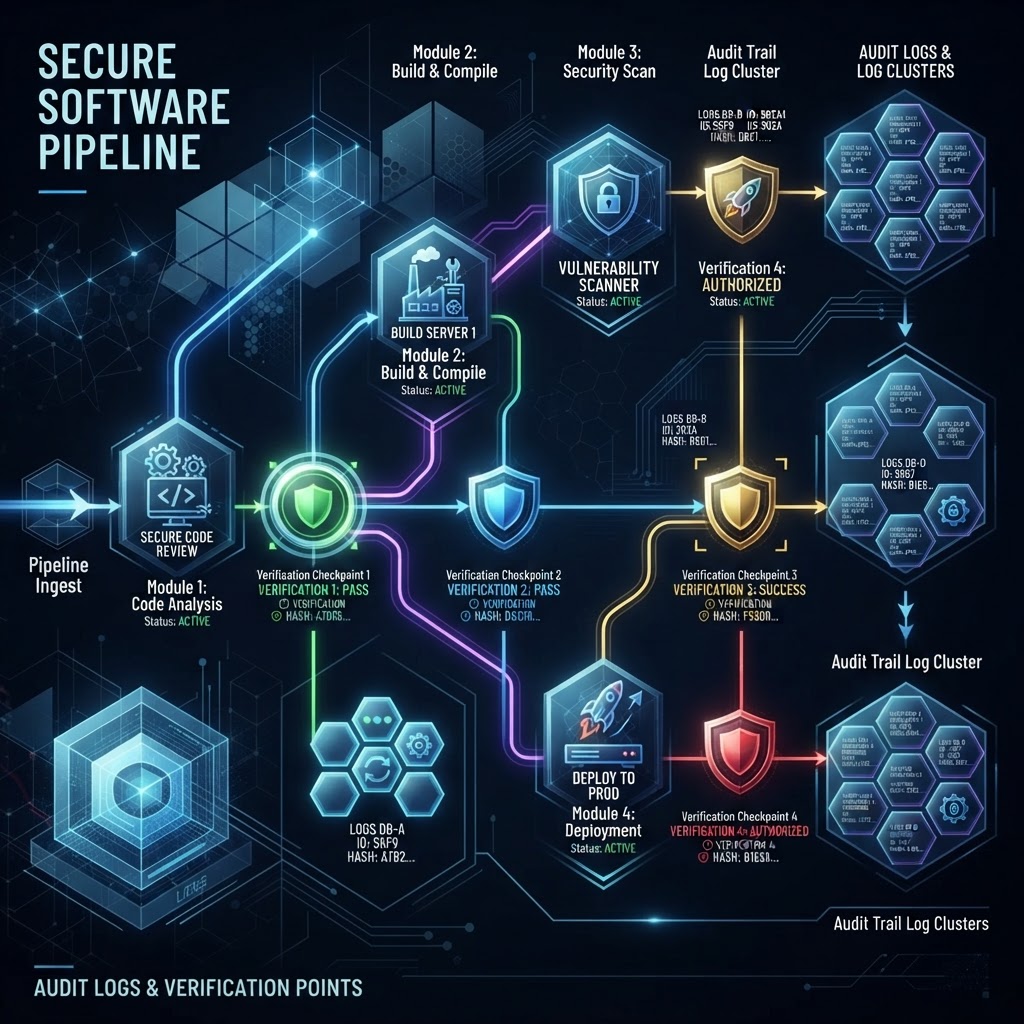
Auditability is often overlooked in agent design. If an agent is a generalist, tracing a bad decision back to a specific capability is difficult. If the agent acts within a specialized role, the workflow engine can log exactly which role was responsible for an action and verify that the action remained within the defined boundaries of that role. This creates a deterministic trail of evidence for both security and compliance.
Mapping Organizational Charts to Software Architecture
The most sophisticated agent systems currently under development treat internal organizational structures as the blueprint for software architecture. In a Security Operations Center, the separation between Triage, Hunting, and Forensics is not arbitrary. It represents a division of expertise and risk. Encoding these divisions into software prevents the cross-contamination of concerns. A researcher looking at Elastic's approach to Watches and Workers sees this principle in action. Each Watch encapsulates a core responsibility of the security function, and individual Workers handle the granular tasks within that responsibility.
This architecture is extensible to other domains. In finance, you might have separate agents for reconciliation, forecasting, and anomaly detection. Each agent has its own memory, its own unique set of tools, and most importantly, its own specific context window. Feeding a model the entire history of a company to solve a single reconciliation error is inefficient and increases the likelihood of hallucination. Role-specific context ensures that the model operates only on the information relevant to its defined scope.
Redefining Evaluation Metrics
Generalist models are often evaluated on broad benchmarks that fail to reflect the nuances of enterprise work. If an agent is defined by a role, evaluation becomes a matter of operational performance. Instead of asking if the AI is intelligent, we ask if the triage worker identified the correct incident volume, or if the remediation worker proposed a reversible fix. These metrics are objective, measurable, and directly tied to the value of the software. When we stop measuring AI performance by its ability to sound like a human and start measuring it by its success rate in fulfilling a defined responsibility, we move from experimentation to infrastructure.
The Path to Trustworthy Automation
Human oversight should not be a global switch that flips on or off. It should be a design feature of the role. When a worker has the power to take a high-impact action, the workflow should mandate a human-in-the-loop checkpoint. This is not a delay in the process; it is a critical safety filter. By integrating these approvals into the architecture of the agent, we allow the system to scale while maintaining strict control over risk.
Ultimately, the future of enterprise AI will not be defined by a single super-agent that replaces entire departments. It will be defined by the creation of specialized, bounded, and interconnected workers that execute specific operational responsibilities. This shift from generalism to specialization is the necessary evolution from impressive AI demonstrations to reliable enterprise infrastructure. Trust is built by defining what an agent cannot do, as much as what it can do.