Machine-First CLI Design Transforms Infrastructure Reliability
Modern command line interfaces must evolve from human-centric displays into deterministic execution boundaries for AI agents. By prioritizing structured inputs, policy-based access, and credential isolation, developers can build robust foundations for autonomous systems.
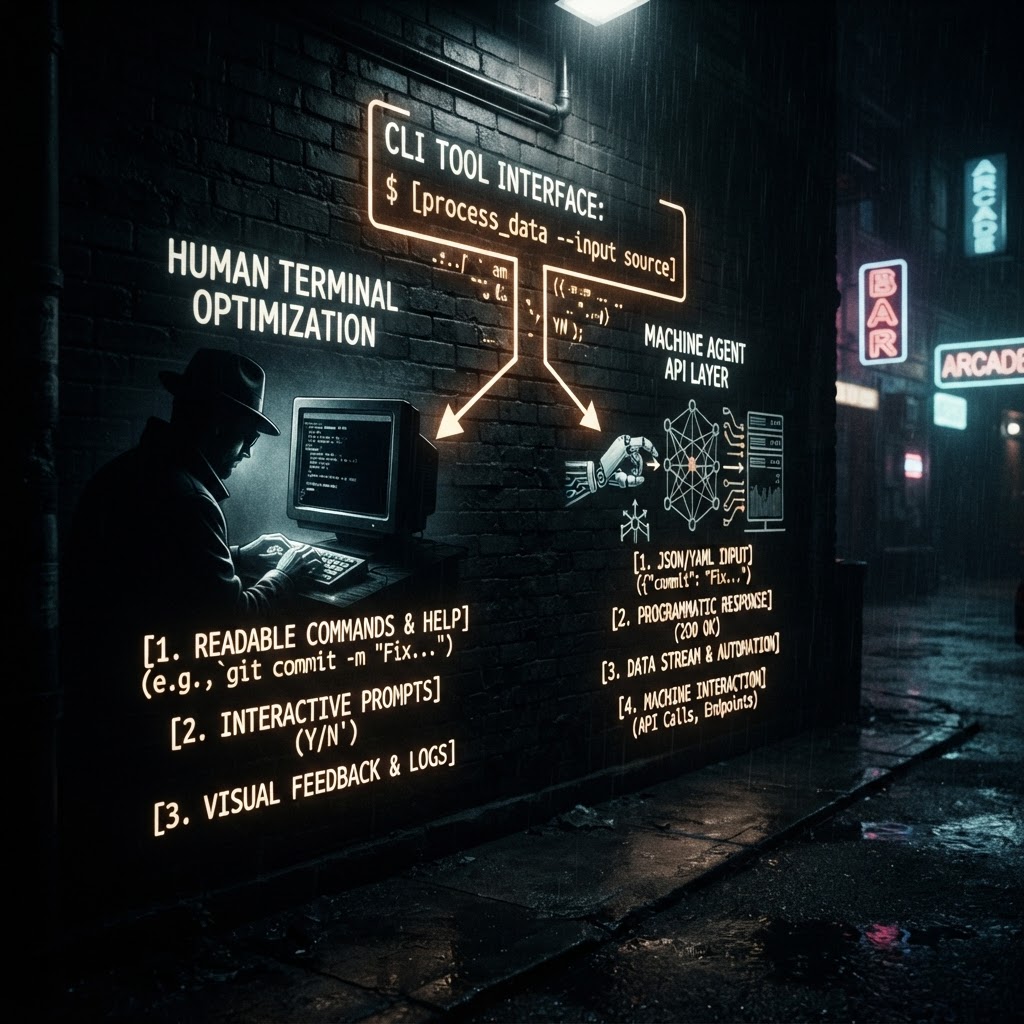
The Shift from Terminal Emulation to Agent Runtime
For decades, the command line interface has served as the primary gateway between a human administrator and the underlying infrastructure. These tools were crafted for the human sensory experience. They use colors for emphasis, tables for readability, and prose for error handling. When a developer types a command, they are engaging in a subjective interpretation of the output. If a command returns a vague error, the human brain performs a heuristic assessment, checks logs, and attempts a fix. However, the rise of AI agents changes the fundamental nature of this relationship. An agent does not need a user friendly display. An agent requires an execution boundary that provides deterministic outcomes.
Elastic recently introduced a CLI that represents a significant departure from traditional tooling. It treats the agent as a primary user, not an afterthought. This design pivot highlights a critical reality: the interface between an application and an AI agent is now as important as the interface between software and a human. We are witnessing the birth of the Agent Experience, or AX, where the success of a technology platform will be measured by its ability to provide reliable, machine-readable contracts.
Moving Beyond Ambiguous Prose
The greatest barrier to autonomous operation is the ambiguity inherent in human-readable output. Traditional CLI tools often print messages such as, something went wrong connecting to the server. A human reads this and understands the context. An AI agent, however, struggles to categorize this event. Was it a networking timeout, a failed DNS lookup, or a server side authentication error? Without structured data, the agent is forced to guess or trigger a recovery routine that might exacerbate the problem.
Machine operated tools must replace prose with structured information. When a CLI returns a JSON payload including an error code and a status field, it provides a programmable interface for the agent to branch its logic. This is not merely a cosmetic change. It is a fundamental shift toward operational reliability. By moving away from screen scraping, we treat the CLI as an API rather than a text stream.
Validating Intent at the Edge
One of the most dangerous capabilities of an AI agent is its ability to generate high volumes of commands in seconds. Without guardrails, a minor logic error in the agent's reasoning can lead to massive infrastructure damage. Elastic's approach to this problem is the implementation of JSON Schema validation before the command reaches the backend service. This creates a hard boundary between the agent and the production environment.
Validation ensures that the request adheres to a defined protocol before any side effects are triggered. If an agent attempts to pass a malformed string or an invalid configuration parameter, the CLI intercepts the intent. The tool becomes a filter that only permits approved command surfaces to proceed. This is the definition of a safe execution boundary, and it should become the standard for any tool that interacts with critical systems.

Decoupling Knowledge from Capability
Security remains the most challenging aspect of agent integration. Traditionally, we have been forced to embed credentials into configuration files or environment variables that the agent can read. This essentially grants the agent access to every system controlled by those keys. A more mature architecture involves separating the knowledge required to perform an operation from the secret required to authorize it.
By storing API keys in a secure system credential store, the agent can request that the CLI perform a task without the agent ever touching the actual private key. The agent holds the intent, and the CLI holds the capability. This isolation is crucial for enterprise security. If an agent is compromised, the attacker does not automatically gain the keys to the entire infrastructure. They only inherit the restricted set of actions permitted by the underlying policies.
Policy-Scoped Tool Access
Not every agent needs the same level of access. An observability agent should be able to query metrics and fetch health status reports, but it should not have the permission to delete indices or modify cluster security settings. Command allowlists and blocklists provide the necessary granular control to enforce the principle of least privilege.
This tiered approach to tooling transforms the CLI from a simple command runner into a policy enforcement point. When combined with credential isolation, it creates a robust defense in depth strategy for automated systems. This architecture allows developers to deploy agents with confidence, knowing that the scope of their actions is programmatically capped.
The Future of Infrastructure Interfaces
As AI agents become more autonomous, they will become the primary consumers of our APIs. The developers who win in this era will be those who design interfaces that treat the machine as a first-class citizen. This means creating tools that offer predictable schemas, deterministic failure modes, and clear policy boundaries.
The transition we see in modern CLI design is a microcosm of a broader change across the entire software ecosystem. Whether it is AWS, Kubernetes, or custom database drivers, the underlying principle remains the same. If a platform requires an agent to scrape documentation, parse inconsistent text, or manage raw credentials, it will lose ground to competitors that offer a clean, programmable execution boundary. Reliability is the new competitive advantage. By building for machines, we are effectively building for the future of reliable, autonomous operations.