Human-Guided Malware: The Evolution of REF6045 and SCMBANKER
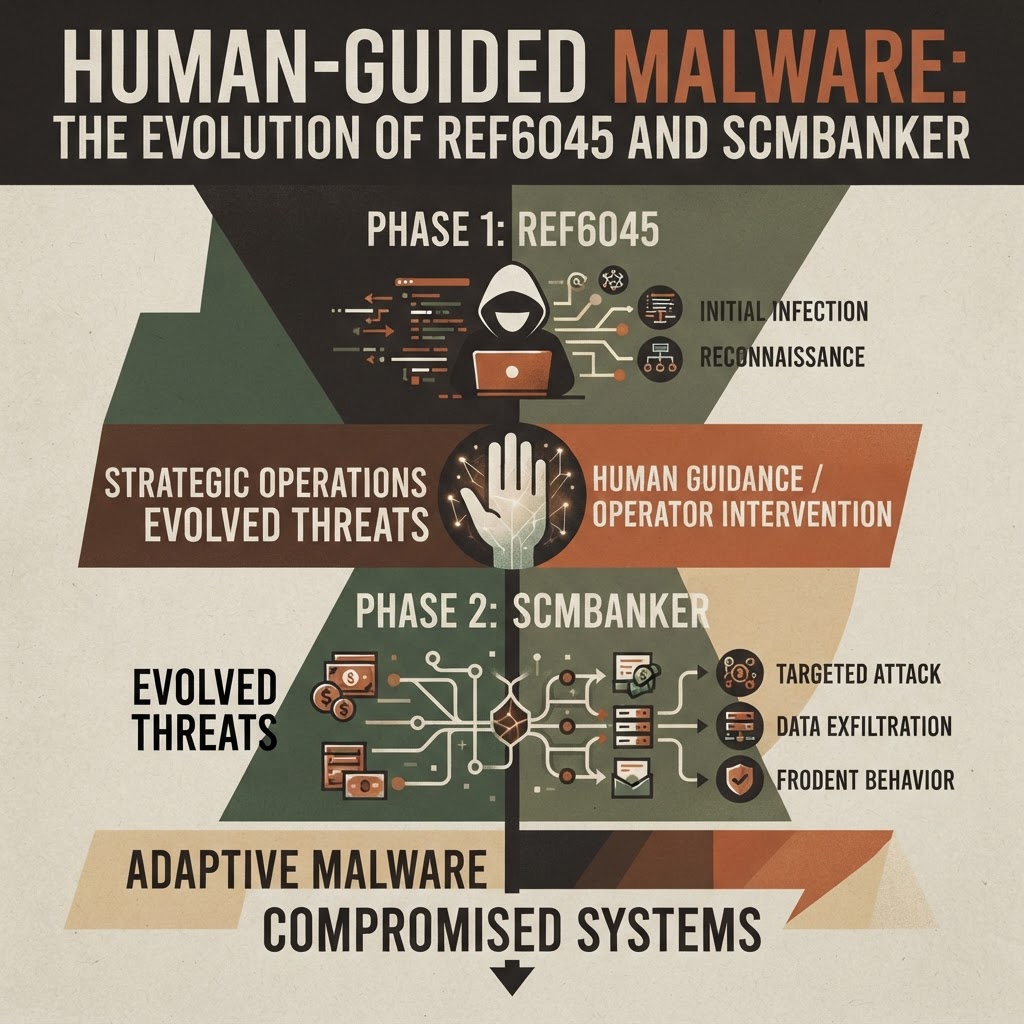
The SCMBANKER toolkit demonstrates a shift toward human-in-the-loop fraud operations that prioritize surgical intervention over automated theft. By leveraging AI-generated scripts and live monitoring, this malware creates a highly efficient system that links endpoint compromise to direct social engineering.
The Shift to Human-Guided Banking Fraud
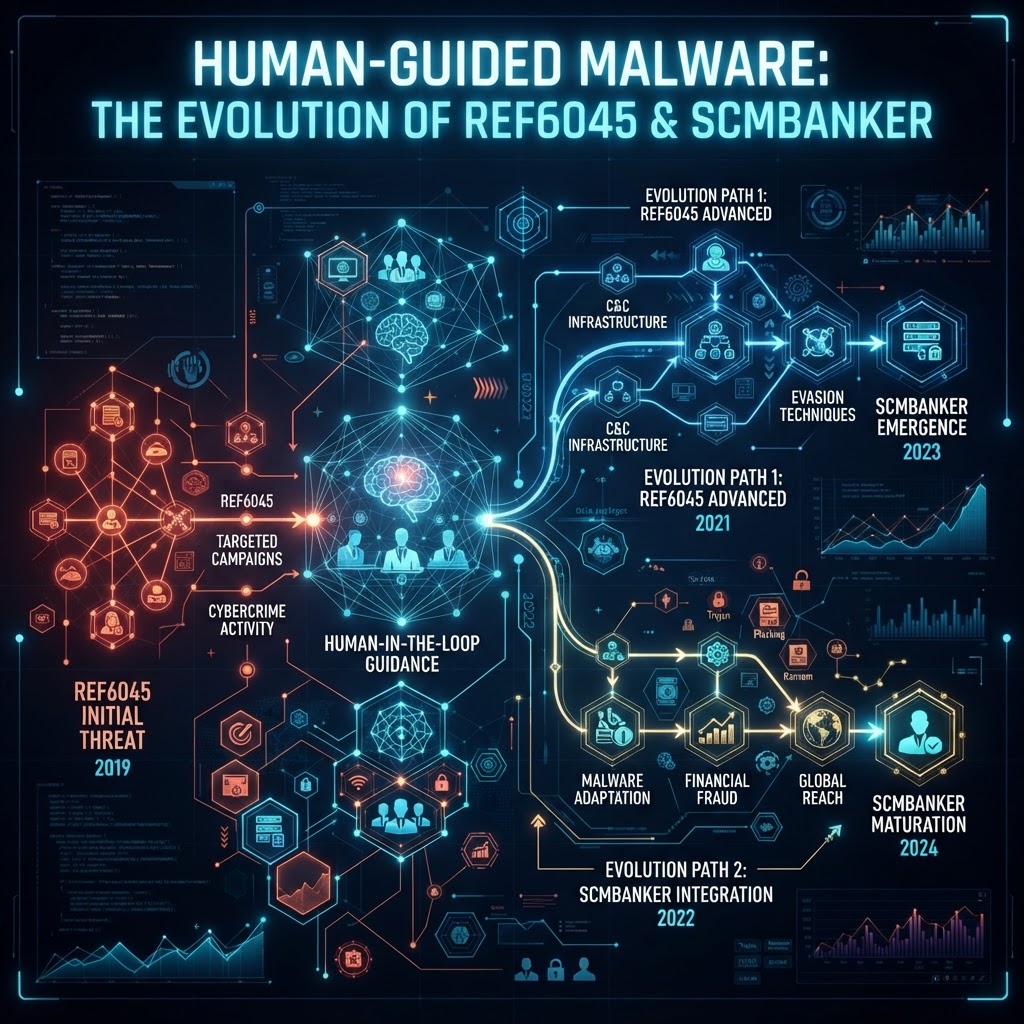
Traditional banking malware often follows a predictable lifecycle: it infects a system, harvests credentials, and exfiltrates data for later monetization. However, the emergence of the SCMBANKER toolkit, used by the REF6045 operation, marks a significant departure from this model. Instead of relying on full automation, this malware functions as a sophisticated observation platform that alerts human operators when a high-value opportunity arises. This transition from automated theft to human-guided fraud represents a critical evolution in cybercriminal strategy.
The Anatomy of the Fraud System
SCMBANKER does not simply capture everything. It performs persistent surveillance on the victim's device, specifically looking for indicators of financial activity. When a user opens a banking platform, a payment processor, or a cryptocurrency exchange, the malware reports this event to the command server. The human operator then decides how to proceed. Options range from triggering fake banking warnings to remote-access installation and real-time clipboard manipulation. This architecture turns the infected machine into a live fraud terminal, allowing the attacker to maximize their returns by focusing only on the most profitable sessions.
The Role of AI in Tooling Development
One of the most concerning aspects of REF6045 is the evidence that large language models played a role in the creation of its PowerShell components. While the code exhibits signs of technical debt and inconsistent logic, it remains highly functional. This underscores a troubling reality: threat actors no longer need to be expert software engineers to build effective attack infrastructure. By utilizing AI to generate components like keyloggers and monitoring scripts, criminals can focus on the business of fraud rather than the intricacies of low-level programming.
 The lower barrier to entry suggests that we may soon see a proliferation of niche, highly localized malware toolkits.
Rethinking Transaction Integrity
Banking security has long focused on identity and authentication. We ask if the person logging in is who they claim to be. SCMBANKER challenges this approach through clipboard hijacking, where the malware silently replaces legitimate account numbers with attacker-controlled data. Because the user has already passed authentication, the transaction appears entirely authentic to the bank. This highlights the urgent need to look beyond identity and prioritize transaction integrity. Banks must implement verification steps that make payment destinations highly visible at the moment of confirmation to prevent these types of silent manipulations.
Defensive Strategies for a New Threat Model
Defenders must rethink how they view endpoint activity. An isolated PowerShell script might seem minor, but when viewed as part of a chain that includes cursor movement, browser redirection, and the presence of commercial remote-access tools, the narrative changes significantly. Security teams should focus on identifying the patterns of a fraud workflow rather than just searching for signature-based matches for specific binaries. By monitoring for behaviors like suspicious administrative activity in tandem with financial application usage, organizations can create better visibility into these complex attacks.
The Convergence of Fraud and Security
REF6045 bridges the gap between technical compromise and social engineering. The vishing component of the malware allows attackers to create a sense of legitimacy that is hard for victims to question, especially when fake warnings appear within the context of active banking sessions. This synchronization between the endpoint and the attacker's voice creates a powerful deception. To combat this, cybersecurity teams and fraud departments must break down their organizational silos. When endpoint telemetry is shared with fraud analytics, institutions gain the ability to detect the intersection of technical compromise and money movement. This holistic view is the only way to disrupt modern, human-guided fraud operations.