FedRAMP CR26 Signals the Death of Static Vulnerability Management
FedRAMP CR26 is shifting the security paradigm by mandating that vulnerability management function as a live, stateful data system rather than a collection of static artifacts. This evolution reflects a broader industry trend where security agents and response channels are increasingly repurposed as programmable operations control planes.
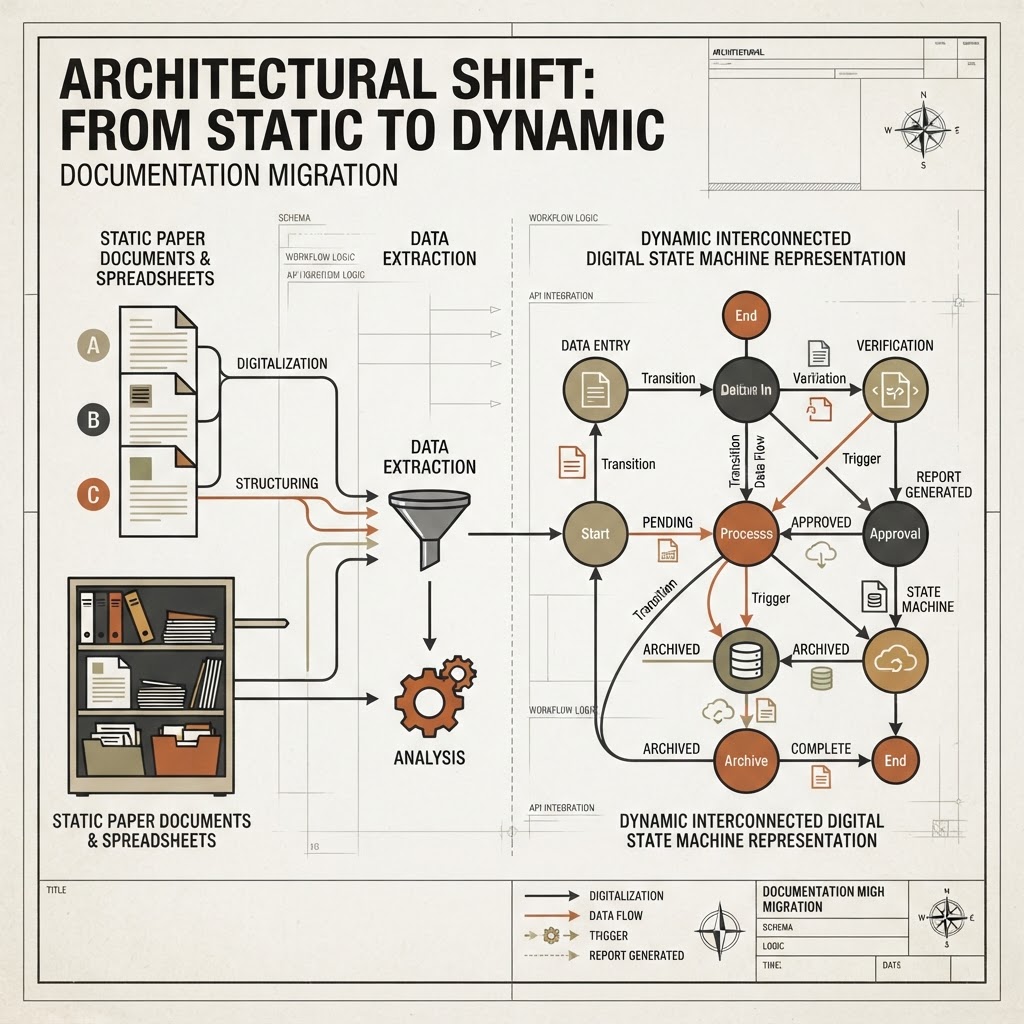
Vulnerability Management as a State Machine
For years, vulnerability management within highly regulated environments has operated as an artifact production machine. Teams run scanners, export large CSV files, update complex spreadsheets, manage Plans of Action and Milestones (POA&Ms), and reconcile exceptions manually. This workflow is fundamentally reactive and prone to significant lag. FedRAMP Consolidated Rules for 2026 (CR26) marks a critical transition away from this document-centric model. The requirement is no longer to simply report a finding but to maintain a live, risk-data system that captures the state of the infrastructure at any given moment.
FedRAMP's new requirements for Vulnerability Detection and Response and Vulnerability Evaluation and Reporting, which become mandatory by late 2026, align closely with CISA Binding Operational Directive 26-04. This alignment signifies that severity, as defined by a CVSS score, is insufficient for modern risk assessment. A CVSS score indicates potential severity, but it remains blind to operational context. It cannot determine if a resource is internet-facing, if an exploit is currently trending, or what the actual impact of a compromise would be on a specific agency environment.
The Stateful Object Approach
To meet these new standards, engineering teams must move beyond static database tables. A vulnerability must be treated as a stateful operational object. This object does not just record the existence of a flaw. It encapsulates the full life cycle of the risk, including asset context, network exposure, active exploit status, mitigation state, and decision provenance. By treating the vulnerability as an evolving object, organizations can move toward automated compliance reporting.
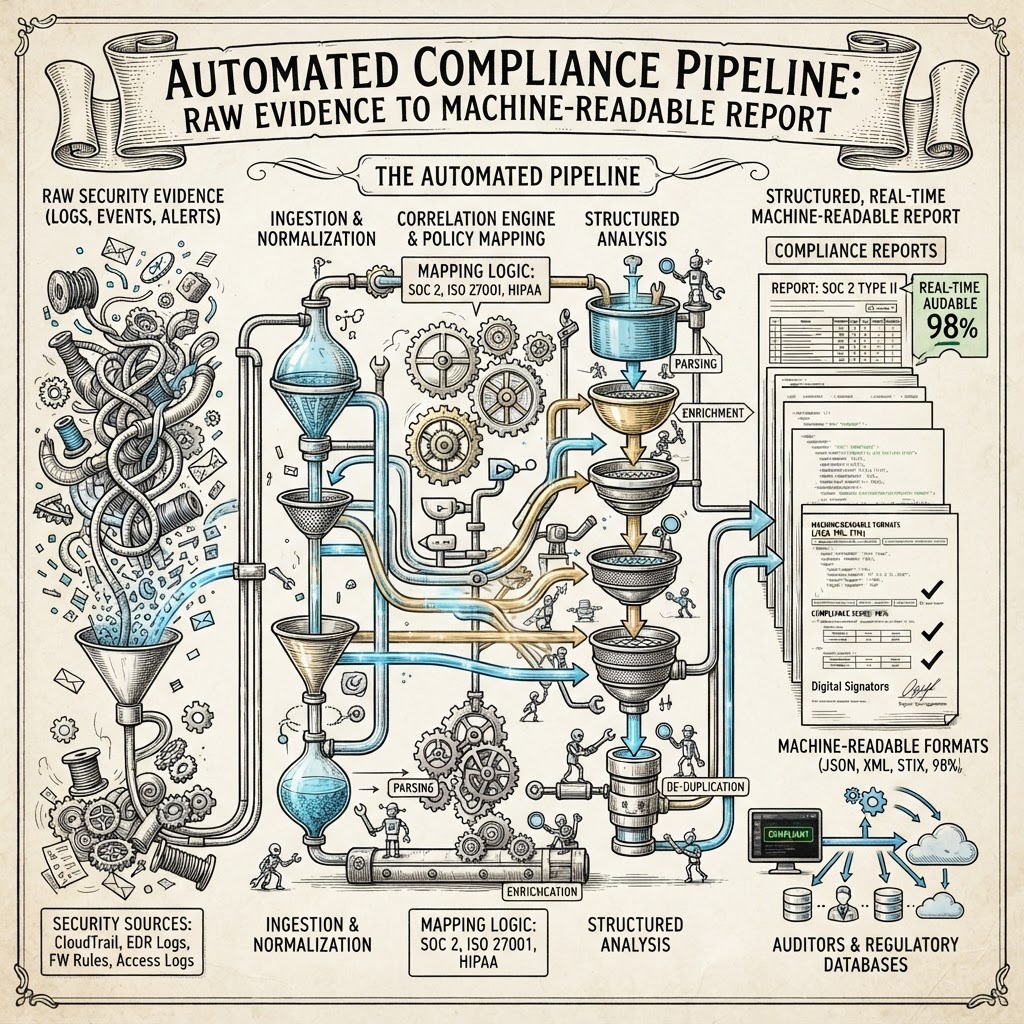
Once the authoritative record of security is structured as machine-readable JSON, compliance is no longer a separate, manual reconciliation task. Instead, it becomes a real-time projection of operational data. This architectural shift requires a robust foundation of asset inventory, scanner evidence, and continuous threat intelligence. Organizations that fail to automate this underlying evidence are likely to struggle, as the burden of proof for every risk decision becomes a core part of the audit trail.
The Evolution of Endpoint Control Planes
This trend toward state-based automation is not limited to vulnerability management. A parallel development is occurring in the domain of endpoint security. Endpoint agents, originally deployed as sensors for detection and response, are increasingly functioning as a secondary control plane for operations. Recent technical implementations, such as those demonstrated by Elastic Security Labs, highlight that security infrastructure already possesses the key primitives needed for fleet management: identity, reach, execution, and auditability.
When a security agent is already present on every endpoint, introducing additional management platforms can increase operational complexity and attack surface. By utilizing existing agent channels to distribute configuration or remediate issues, organizations can leverage a pre-existing, trusted control plane. However, this shift requires strict adherence to architectural guardrails. Unlike traditional mobile-device-management tools, these security-centric control planes must be scoped narrowly, focusing on idempotent actions that converge toward a desired state rather than arbitrary command execution.
Bridging Security and Operations
Security and IT operations have traditionally occupied separate silos, but the requirement for live, evidence-based security is dissolving these boundaries. Whether it is responding to a critical vulnerability or deploying a configuration change to Linux workstations, the underlying requirements are identical. Both require trusted identity, current state awareness, policy enforcement, and repeatable, audited workflows.
Compliance is moving away from the snapshot-in-time approach toward a continuous model where evidence is generated automatically by the security stack. By adopting the principles of idempotency and convergent state, organizations can minimize the friction between maintaining compliance and achieving operational velocity. The goal is no longer to prove that a machine is secure during an annual audit. The goal is to build a system where the security status is always known, always accurate, and always ready for reporting. Those who treat compliance as a byproduct of a well-engineered, state-aware security system will find themselves ahead of the curve as the regulatory landscape continues to tighten.