Columnar Mode Redefines Elastic Stack Economics by Reducing Infrastructure Complexity
Elasticsearch is evolving from a pure search engine into a unified analytical platform by adopting column-oriented storage as a primary data representation. This architectural shift enables organizations to consolidate search and analytical workloads, effectively eliminating the need for redundant database systems.
The Architectural Pivot
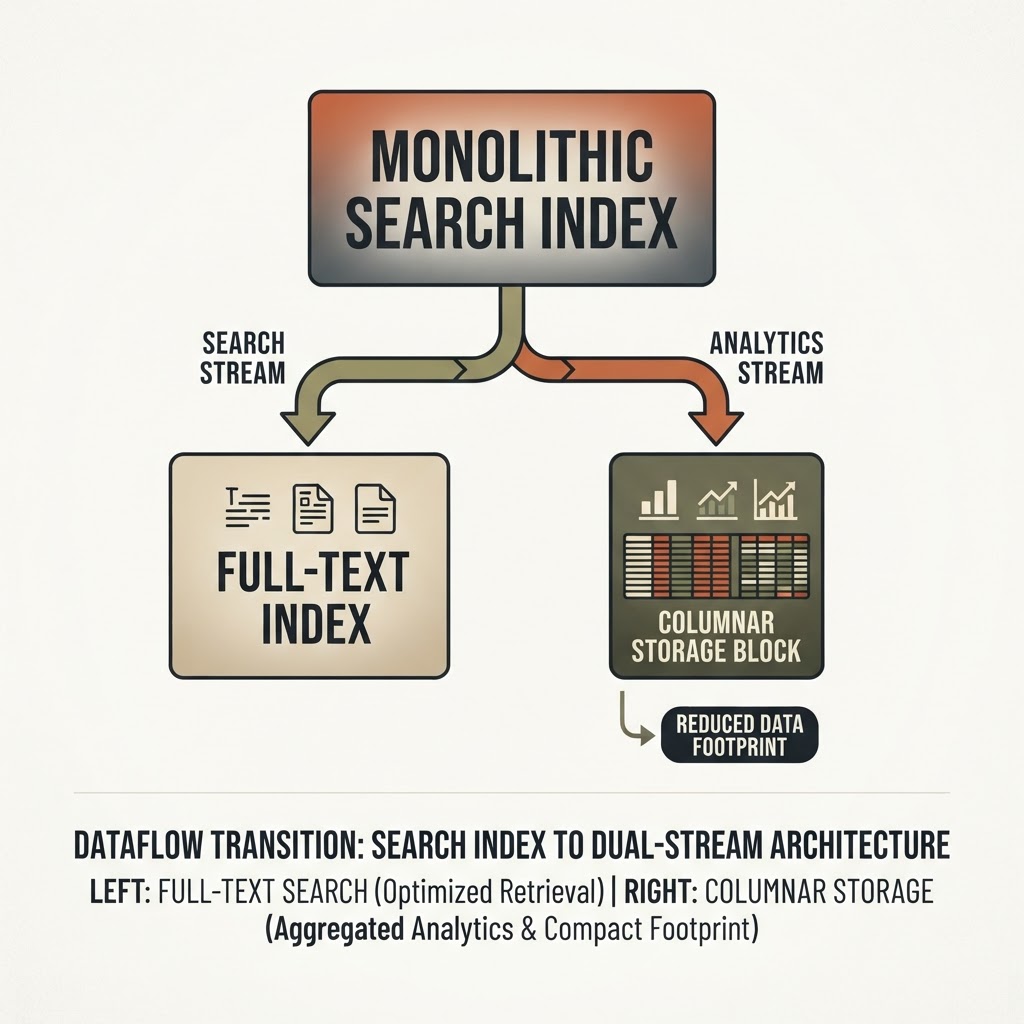
For nearly two decades, Elasticsearch reigned supreme as the go-to solution for log analysis, security event management, and full-text search. Its success was rooted in the inverted index, a structure that maps individual terms to the documents containing them. This structure is peerless for relevance-based search and high-speed filtering across vast datasets. However, the cost of this flexibility is non-trivial. Storing both an inverted index for retrieval and doc values for aggregation consumes substantial disk space and CPU cycles during ingestion. As data volumes exploded, the economics of keeping every piece of telemetry in a search-optimized format became unsustainable for many organizations.
Elasticsearch Columnar Mode represents a fundamental shift in the engine philosophy. Instead of treating the inverted index as the universal default, the engine now offers the flexibility to prioritize columnar storage for data that is primarily scanned rather than searched. This is not a mere configuration tweak. It is a strategic acknowledgment that the modern data landscape requires a hybrid approach where storage efficiency and scan performance are just as vital as low-latency keyword lookups.
Rethinking Data Gravity and System Consolidation
In most enterprise environments, the existence of two distinct data systems represents a massive, often hidden tax. Engineering teams frequently deploy Elasticsearch for operational observability and security, then add a dedicated columnar database like ClickHouse or Amazon Redshift for long-term analytical reporting. This bifurcation introduces significant operational friction. Data must be duplicated across two pipelines, two security models must be maintained, and team expertise must be split between two different query syntaxes.
Columnar Mode strikes at the heart of this inefficiency. By optimizing the Elasticsearch storage layer to handle high-volume scans and large-scale aggregations at a fraction of the previous cost, Elastic is effectively challenging the necessity of the second database. When the primary store can provide analytical performance comparable to dedicated columnar systems, the gravity of the data shifts back toward a unified platform. This consolidation is a massive win for DevOps and security teams who can now rely on a single source of truth for both live alerts and historical trend analysis.
The Engineering Behind the Performance Shift
Removing the inverted index is a trivial exercise if one is willing to accept full table scans for every query. The genius of the Columnar Mode implementation lies in how it maintains query speed without the overhead of heavy indexing. This is achieved through the use of doc-value skippers, which act as sophisticated metadata headers. By maintaining range information for blocks of data, the engine can prune entire sections of storage that do not satisfy a predicate. This approach mimics the zone-map structures found in specialized high-performance analytical engines.
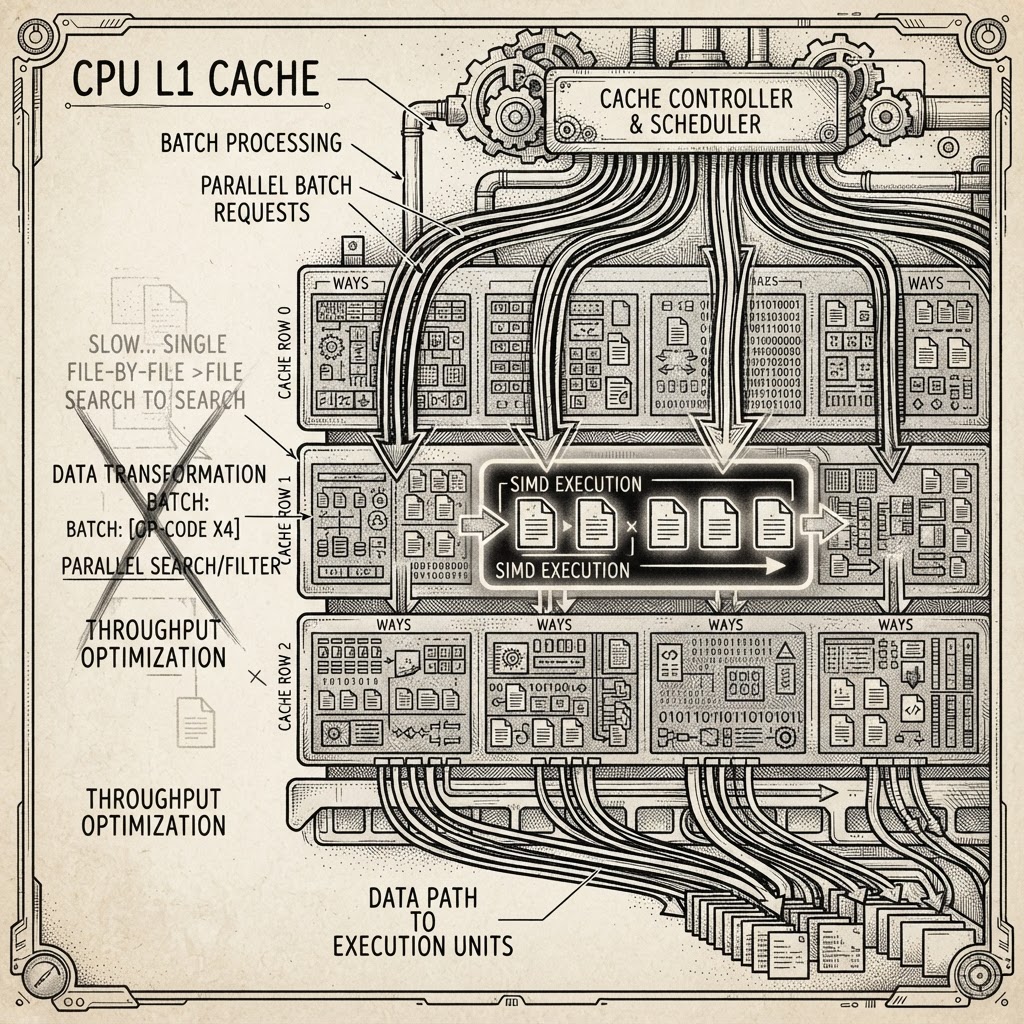
Furthermore, the evolution of Lucene to handle bulk operations is a critical contributor to this efficiency. Traditional search engines process data document by document, which is ideal for pinpointing a single record. However, modern CPUs thrive on batch processing where contiguous memory blocks can be loaded and transformed in parallel. By moving to a columnar layout, Elastic ensures that the data is laid out in memory in a way that respects CPU cache locality. This change allows the engine to perform mathematical aggregations across millions of records with minimal branch misprediction and memory latency.
Tactical Optimizations and Query Intelligence
Beyond just the storage layout, the intelligent rewriting of queries is becoming an essential part of the Elastic ecosystem. When the engine understands the underlying structure of the data, it can replace brute-force operations with highly efficient specialized logic. For instance, evaluating a wildcard search for a substring within a large text field is computationally expensive. If the engine knows the data is stored in a specific columnar format, it can leverage specialized string-length metadata or substring automata to skip massive portions of the data set.
These optimizations demonstrate that Elastic is moving toward a more proactive execution model. Instead of blindly executing user requests, the query planner assesses the physical structure of the index and chooses the cheapest execution path. This reduces the resource footprint per query, which in turn lowers the total cost of ownership for high-retention data sets. When combined with the storage savings from dropping the inverted index for non-text fields, the result is a significantly leaner infrastructure that remains as powerful as its more verbose predecessor.
When to Use Which Mode
It is vital to recognize that Columnar Mode is not a silver bullet designed to replace all previous paradigms. The inverted index remains the gold standard for full-text search, relevance scoring, and high-cardinality keyword lookups. Systems that prioritize finding a needle in a haystack of billions of documents will still benefit from the traditional indexing strategy.
However, for fields that serve as the backbone of analytical dashboards, such as status codes, timestamps, and metric identifiers, the switch to Columnar Mode is a transformative decision. The architect of the future will not ask whether they need to choose between two competing database systems. Instead, they will define the storage strategy on a per-field or per-index basis within the Elastic Stack itself. This granularity allows for fine-tuned performance tuning that matches the exact access pattern of the application data.
Conclusion: Less Architecture, More Capability
At its core, the rise of Columnar Mode in Elasticsearch is about the maturity of observability and data platforms. The era of blindly indexing everything for every possible query is ending, replaced by an era of intentional, storage-efficient architecture. Organizations that adopt these newer, smarter storage strategies stand to benefit from lower cloud bills and decreased operational overhead.
By unifying search and analytics into a single engine, Elastic is simplifying the architectural map for modern enterprises. Reducing the number of moving parts while simultaneously increasing the efficiency of the core system is the ultimate goal of mature infrastructure engineering. As the lines between search, analytics, and vector databases continue to blur, the winners in this space will be those that provide the most flexibility with the fewest moving parts. Columnar Mode is a decisive step toward that goal, proving that the most valuable optimizations are often the ones that eliminate unnecessary complexity.