Beyond the SVG: How Malware Priorities Expose Attacker Strategy
While North Korean threat actors use clever SVG steganography to hide their code, the true intelligence lies in the malware's deliberate selection of stolen data. By analyzing what the attackers collect and what they intentionally ignore, security teams can map out the economic motivations driving these campaigns.
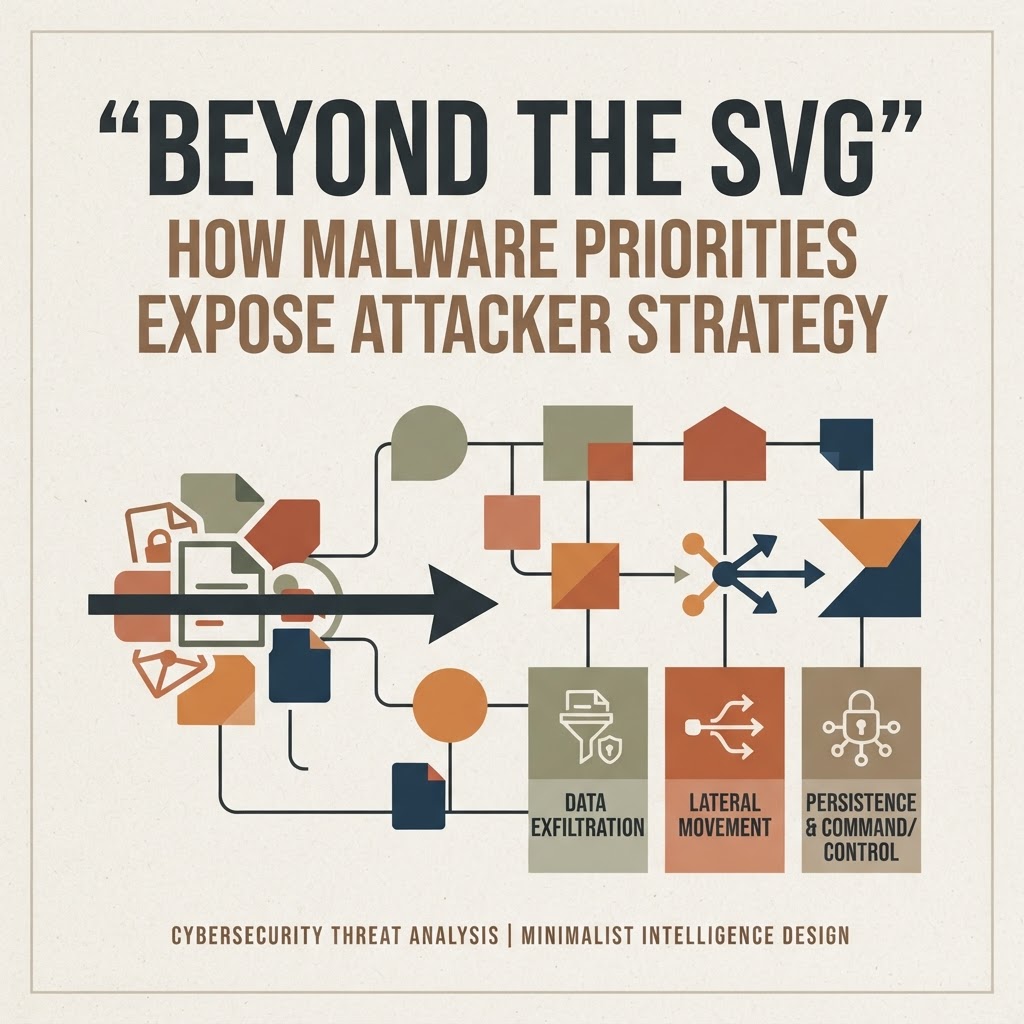
The recent analysis of the Contagious Interview campaign by Elastic Security Labs contains a striking detail. Attackers hid malicious code fragments inside SVG country flags. This visual flair makes for a perfect headline, but focusing solely on this technique obscures a far more significant story. The malware, identified as REF9403, operates with a level of intentionality that reveals the attackers' true priorities. By examining the choices embedded in the code, we can see exactly what these actors value most in a compromise.
The Misleading Allure of Steganography
The infection method is certainly effective. By cloning a legitimate Next.js project and embedding Base64 payloads within SVG comments, the attackers ensured the application remained functional while the malicious chain activated upon running the dev environment. However, the SVG files are merely a delivery vehicle. The real insight begins once the four primary modules launch. These include browser credential theft, recursive file collection, persistent remote access via Socket.IO, and aggressive clipboard monitoring. These modules are not just tools; they are a manifestation of the attacker's desired outcome.
Economic Logic in Malware Design
Unlike indiscriminate information stealers that vacuum up every file on a disk, REF9403 is highly selective. Elastic discovered a hard-coded list of 25 cryptocurrency wallet extensions, yet only eight received special handling. If the malware detected one of these high-value wallets, it initiated a retry loop to ensure the data reached the command and control server. The other wallets received no such priority. This implementation detail implies that someone made a conscious decision about the economic value of specific digital assets. The malware authors are optimizing for yield rather than mass collection, treating their software like a commercial product with specific quality of service tiers.

The Exclusion List as an Inventory of Knowledge
The malware also contains a comprehensive list of directories to ignore. This list includes common noise like node modules and temporary files, but it also features modern developer tools like Cursor, Windsurf, and Pearai. While some might assume the absence of collection from these folders suggests these tools are safe, the reality is more telling. The existence of these specific exclusions proves that the attackers are familiar with the modern development stack. They know what exists on a developer's machine and have decided, for their own operational reasons, to exclude those paths. This list effectively documents the author's awareness of current industry standards.
Turning Developer Machines Into Contextual Maps
Why go to such lengths to filter data? The answer lies in the value of operational context. The malware targets environment files, SSH keys, cloud configurations, and shell histories. These assets provide an attacker with more than just passwords. They provide a map of an entire organization. By compromising a single developer machine, an attacker can learn how services communicate, where repositories live, and which cloud platforms an entity utilizes. This turns a simple infection into a strategic asset that allows the adversary to wait for more lucrative opportunities to present themselves.
The Role of Trust in Social Engineering
Contagious Interview is fundamentally a trust transfer mechanism. The process of conducting a fake coding interview lends legitimacy to the malicious repository. Developers are accustomed to cloning projects, installing dependencies, and running local builds. By masquerading as a legitimate recruitment process, the attackers utilize the victim's professional norms as an exploit. When an attacker can convince a target that they are completing a coding challenge, the act of running malicious code becomes part of the job rather than a security event.
Defender Intelligence Through Attacker Optimization
Defenders should look at these malware samples as records of engineering decisions. Every exclusion added, every priority changed, and every refinement in targeting reflects the attacker's evolving strategy. If a later version of the malware adds support for a new operating system or targets a different set of cloud credentials, researchers can deduce shifting business priorities. By tracking these changes, security teams can anticipate where the adversaries will focus their efforts next. The most valuable threat intelligence is not the code itself, but the logic and economic strategy that the attackers have burned into the binary.