Beyond the Index: How Data Federation Transforms Elasticsearch into a Unified Analytics Engine
Elasticsearch is evolving from a strictly indexed search engine into a broader data access layer through the introduction of ES|QL Data Federation. This architectural shift allows organizations to query external object storage directly, challenging the traditional necessity of ingesting all data before analysis.
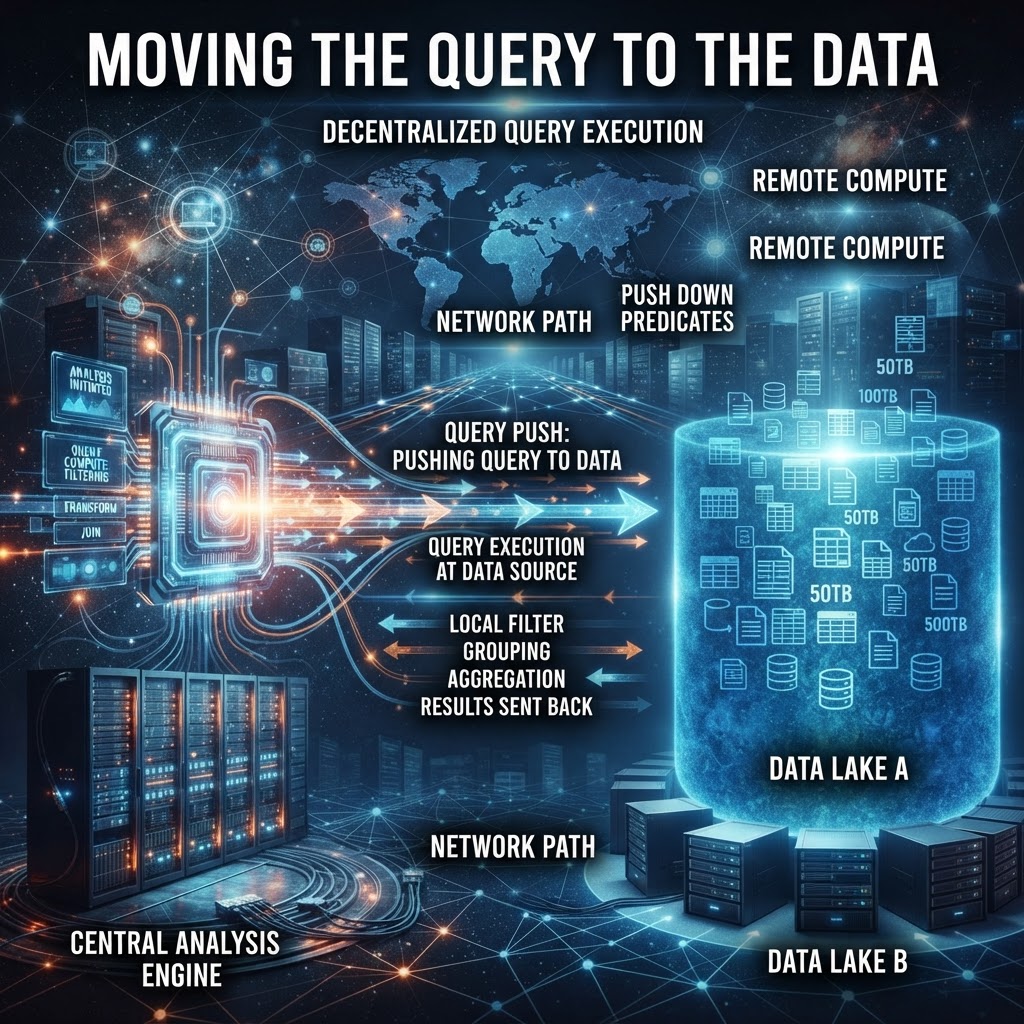
The Traditional Assumption of Elastic Data For most of the history of Elasticsearch, the platform functioned under a rigid paradigm: the data must exist inside the index to be queryable. This workflow, characterized by a journey from source to ingest, transformation, indexing, and finally querying, has been the gold standard for high performance. It ensures that data is structured for inverted indices, allowing for the sub-millisecond search speeds and complex aggregations that have made Elasticsearch a cornerstone of modern logging and observability. Yet, this model imposes a significant tax in the form of storage costs, compute overhead during ingestion, and latency between data creation and its availability for analysis. ## Challenging the Ingestion Tax The arrival of ES|QL Data Federation represents a departure from this necessity. By enabling the querying of datasets stored in locations like Amazon S3, Elastic is acknowledging a reality that data engineers have faced for years. Not every byte of information warrants the cost and complexity of ingestion. Some data is too voluminous to index, some is rarely accessed, and some exists only as a snapshot for a potential, future investigation. In these cases, the traditional ingestion pipeline becomes a bottleneck. Federation introduces a different architectural path: external object storage queried directly through the familiar ES|QL interface. This changes the fundamental role of the query engine from an index-dependent system to a broader data access layer. ## The Power of the Query-to-Data Model The most significant insight here is the reversal of data movement. Instead of moving data into the query engine, we move the query to the data. When an organization holds petabytes of historical logs in S3, the cost of moving that data into Elasticsearch can be astronomical. With Data Federation, users can run a simple ES|QL query against that S3 bucket without triggering an ingestion process. This allows for exploratory analysis of cold data at a fraction of the cost, provided the user accepts the trade-offs of remote storage access.
Efficiency Through Selectivity One common misconception is that federated queries will perform identically to queries on a local index. This is impossible given the laws of physics and network latency. However, performance can be managed through intelligent design. Because modern formats like Parquet are column-oriented, ES|QL can optimize the data retrieval process by fetching only the necessary columns. If a user queries only five fields out of a hundred, the system ignores the remaining data, drastically reducing network I/O. This highlights a critical lesson for architects: federated queries reward selectivity. Filtering data at the source and limiting the scope of the request is no longer just a best practice; it is a requirement for maintaining functional query performance. ## The Architectural Separation of Source and Dataset A vital aspect of the new architecture is the distinction between a data source and a dataset. A data source defines the connection parameters, such as the authentication mechanism and the bucket location, while a dataset defines the logic of the data being queried. This abstraction allows for clean administrative boundaries. Credentials can be managed and rotated at the source level without affecting the definitions of the datasets themselves. This modularity is essential for scaling, as it mirrors how professional data infrastructure platforms decouple connection management from data modeling, ensuring that secrets and access policies remain independent of query logic. ## Security as a First-Class Citizen The shift toward federation forces a more sophisticated approach to security. When Elasticsearch reaches out to an external S3 bucket, it must handle identity and access management with the same rigor it applies to its own local indices. By leveraging federated identity and temporary, scoped credentials rather than static access keys, Elastic promotes a much safer, machine-to-machine trust model. This reduces the risk of credential leakage and ensures that the query engine only accesses the specific data allowed by the identity provider. It proves that federation is not merely a feature of convenience; it is an evolution in security architecture. ## Choosing the Right Tool for the Job It is important to emphasize that this change does not make indexing obsolete. If a dataset requires constant, low-latency access, powering a real-time dashboard, or triggering time-sensitive alerts, the traditional Elasticsearch index remains the superior choice. Federation is best applied to the long tail of data: archived logs, telemetry that is only checked during incident response, or one-off exploratory tasks. The decision is now a spectrum rather than a binary switch. Architects can finally ask when data needs to be in Elasticsearch rather than if it should be there at all. ## The Future of Distributed Query Engines This trend is part of a larger, industry-wide shift toward the decoupling of compute and storage. As systems become more modular, the identity of the data itself becomes less tethered to the system performing the analysis. If ES|QL can effectively query both local indices and remote object storage through a unified interface, the user experience becomes agnostic to the underlying storage implementation. The long-term value of this shift is the creation of a seamless, distributed query environment. While the technology is currently experimental and requires careful implementation, the direction is clear. Elasticsearch is moving beyond the confines of its own index, aiming to become the common interface for data that lives everywhere.