Back to Stream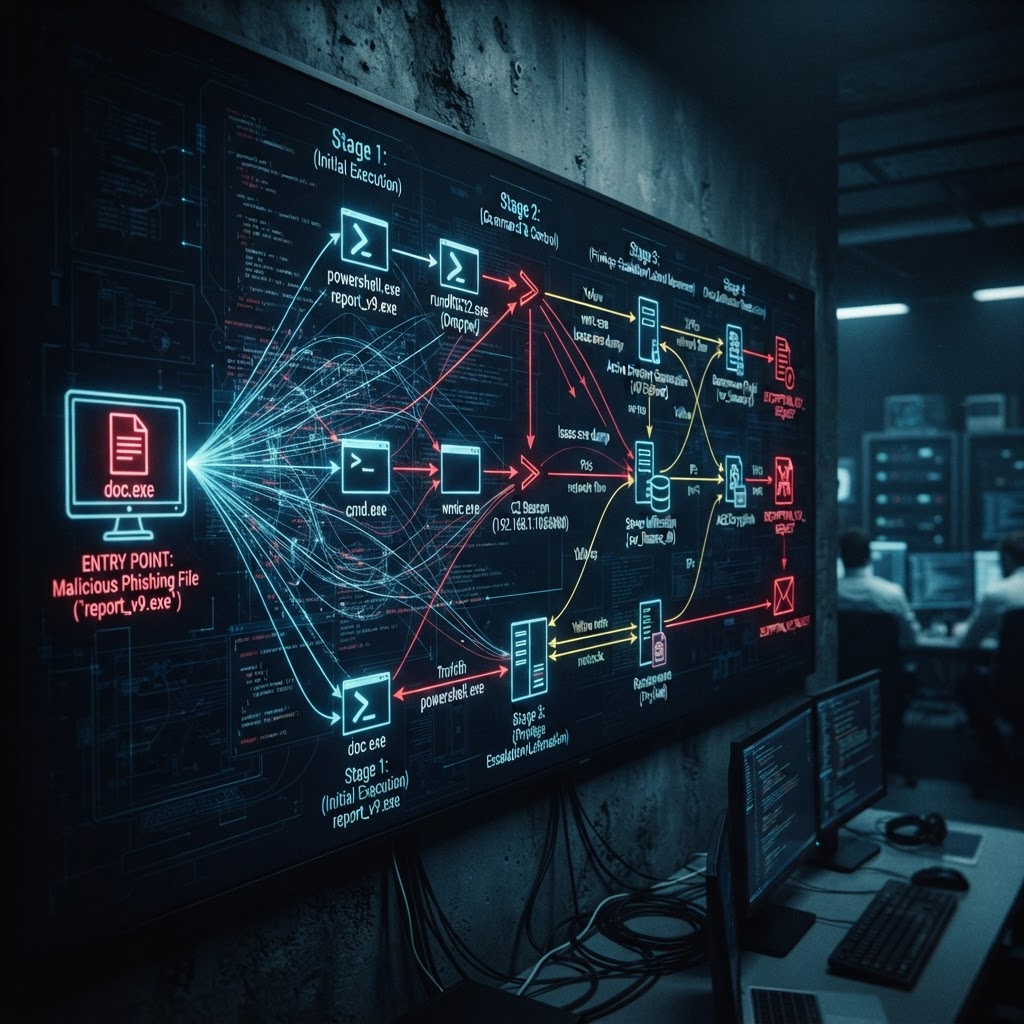
Cybersecurity TestingSeptember 16, 202695% synthesized
Beyond the File: Why Modern Endpoint Testing Must Evolve to Detect Processes over Artifacts
Modern enterprise security requires a shift from testing simple malware detection to evaluating complex, multi-stage attack chain visibility. This article examines how the 2026 AV-Comparatives EPR test sets a new standard for benchmarking security platforms by focusing on behavioral context and operational efficiency.
The Death of the Simple AV Benchmark. For decades, the gold standard of endpoint security testing was straightforward: take a thousand malicious files, run them against an agent, and calculate a percentage. If a vendor caught 99.9 percent of the files, they were the winner. However, this approach has become a dangerous relic of the past. Modern cyberattacks are not merely about delivery of a malicious payload. They are complex, multi-stage processes that exploit legitimate tools and human behavior. The recent 2026 Endpoint Prevention and Response (EPR) test by AV-Comparatives reflects this reality by moving the goalposts from static detection to comprehensive attack chain analysis. ## Modern Attacks Are Processes. To understand why simple file-based testing is failing, one must look at the anatomy of a modern intrusion. A typical breach does not begin with an executable file being flagged by a signature database. Instead, it starts with a subtle phishing email, followed by the execution of a legitimate administrative tool like PowerShell, or perhaps a living-off-the-land technique that abuses Windows Management Instrumentation (WMI). In this scenario, every individual step of the attack might look benign to an unsophisticated security tool. An attacker might use legitimate credentials to access a database or move laterally across a network using standard remote desktop protocols. If the security platform only asks, Is this file malware, it will likely return a verdict of safe. The more important question is, Does this sequence of otherwise understandable actions represent an attack. This is the difference between a legacy antivirus tool and a modern Endpoint Detection and Response platform.
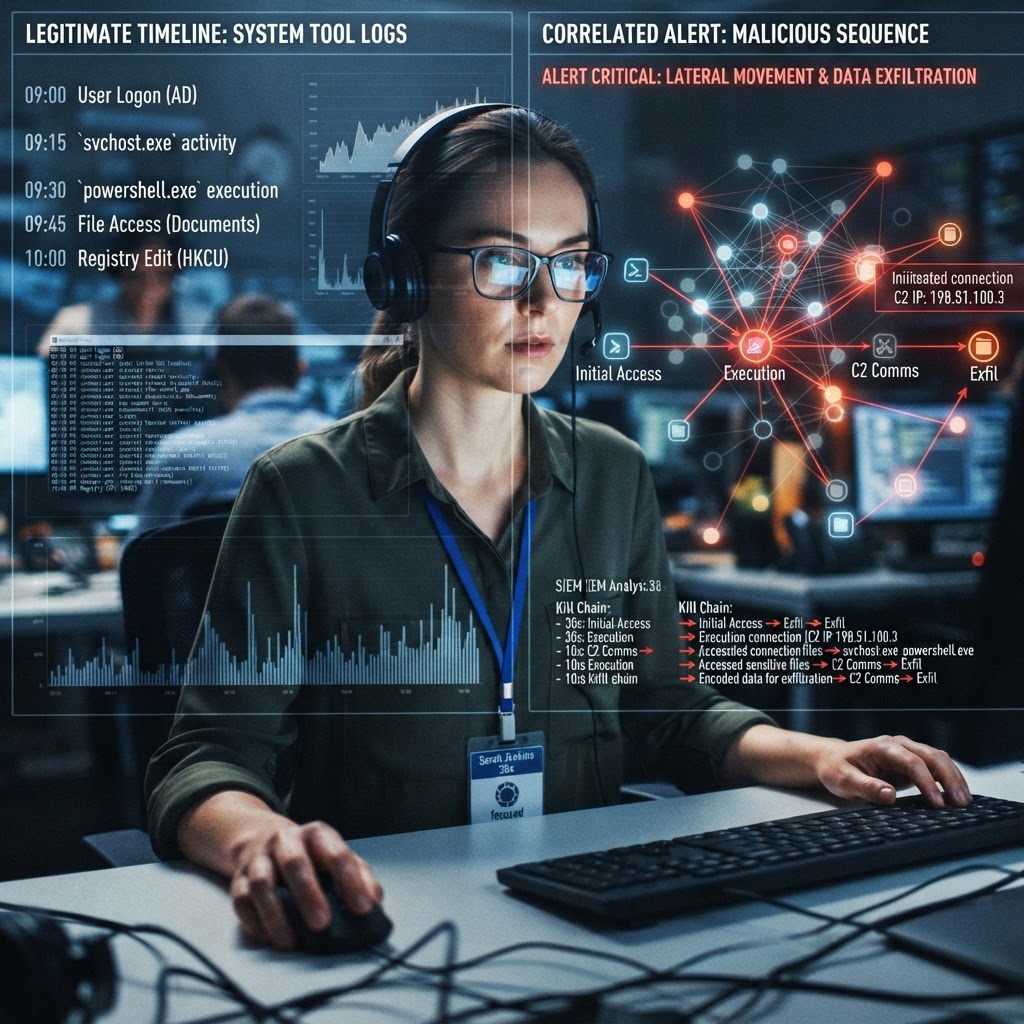
The Tension Between Prevention and Visibility. A central finding of the latest EPR evaluations is that prevention is only half of the battle. AV-Comparatives highlights the distinction between Active Response and Passive Response. Active Response is the ability to stop an attack in its tracks. Passive Response is the ability to provide deep, actionable telemetry that tells a security analyst exactly how a breach occurred. A product that blocks everything but provides zero context is actually a liability. If a company stops an attack but does not understand how it started, they remain vulnerable to the same entry point. Conversely, a product that provides endless logs but fails to prevent the attacker from completing their objectives is equally ineffective. Modern security teams require a balance of prevention, detection, investigation, and response. The true utility of an EDR is not just in the stop, but in the story it tells the SOC team. ## Why Operational Noise Is a Security Risk. The 2026 EPR evaluation introduces a critical variable: operational impact. Security vendors often chase the highest detection rates, but those rates often come at the cost of massive alert fatigue. If a platform detects 1 percent more threats but generates five thousand extra low-value alerts, the total security posture of the organization likely declines. Analyst time is the most constrained resource in any Security Operations Center. When a system floods the queue with false positives, the most dangerous alerts are inevitably buried beneath the noise. Therefore, effectiveness must be calculated as a ratio of meaningful threats stopped divided by the operational effort required. A high-performing platform is one that prioritizes context over volume. ## The New Era of Behavioral Context. Lateral movement is perhaps the best example of why static testing is dead. Authenticating to a server, running a script, or creating a new process are all normal administrative tasks. Attackers succeed specifically because they weaponize these normal capabilities. Because these actions are not inherently malicious, the security platform must look at the temporal and causal relationships between events. It must understand that while a PowerShell command is normally safe, a PowerShell command following a credential dump and originating from a compromised user account is a critical incident. Testing must now account for this behavioral context. If a test does not simulate the entire path from the initial foothold to the final objective, it fails to measure the most important capabilities of the security software. ## The Future of Benchmarking. We are moving toward a future where security testing is essentially a simulation of an investigation. Instead of asking if a tool can recognize a specific strain of ransomware, we must ask if the tool can help an analyst reconstruct an attack chain in real time. Can the system show where the attacker entered, what accounts were compromised, and what data was exfiltrated. The platforms that succeed in this new environment are those that act as intelligence engines rather than simple gatekeepers. While the 2026 AV-Comparatives results highlight leaders like Elastic Security, the ultimate lesson is that testing provides a baseline, not a replacement for internal validation. Organizations should use these reports to narrow their search, but they must ultimately test these products against the unique quirks of their own infrastructure and their own internal security workflows. Security has become a game of reasoning, not just pattern matching. The tools that win the future will be the ones that help us understand the adversary faster than they can achieve their goals.
Sources & Synthesis