Anomaly Detection Is Dead: Shift Toward Operational Change Identification
Modern observability demands a transition from simple threshold alerts to context-aware change detection that bridges the gap between telemetry and resolution. By integrating statistical analysis directly into the investigation interface, teams can reduce the friction between discovering a problem and acting on it.

The Flaw of Threshold-Based Monitoring
For decades, IT operations relied on the simplicity of thresholds. If CPU usage exceeds 90 percent, send an alert. If disk space drops below 10 percent, trigger a ticket. While this model is intuitive, it fundamentally fails to account for the nuance of modern, distributed architectures. Systems rarely break because of a single hard limit. Instead, they fail because of subtle, creeping deviations in behavior that never trigger a static rule.
Traditional anomaly detection was designed to solve this by flagging anything that deviates from a historical norm. However, these systems often created a new problem: alert fatigue. When a model signals an anomaly without providing context, it essentially forces an analyst to switch contexts. The analyst moves from their primary dashboard to a raw logs screen or a separate metrics platform, attempting to reconstruct the narrative of what happened. This manual stitching of data is where the vast majority of incident response time is wasted.
Rethinking Anomalies as Structural Changes
True operational insight does not come from finding outliers. It comes from identifying structural changes in the underlying system state. Consider a microservice environment where latency drifts from 120 milliseconds to 300 milliseconds. A static threshold of 200 milliseconds might eventually catch this, but it ignores the inflection point. Was the change sudden, or was it a gradual decay after a specific deployment? Was the shift global, or localized to a single cluster?
Change-point detection moves the conversation from the question of Is this value bad to the question of Has the underlying behavior changed. By applying statistical rigor to time-series data, tools like the ES|QL CHANGE_POINT command identify shifts in variance, mean, or distribution shape. This approach is superior because it acknowledges that an operational regime change is more significant than a momentary spike. A spike might be transient noise, but a change point represents a shift in the system environment that demands an explanation.
The Power of Dimensional Partitioning
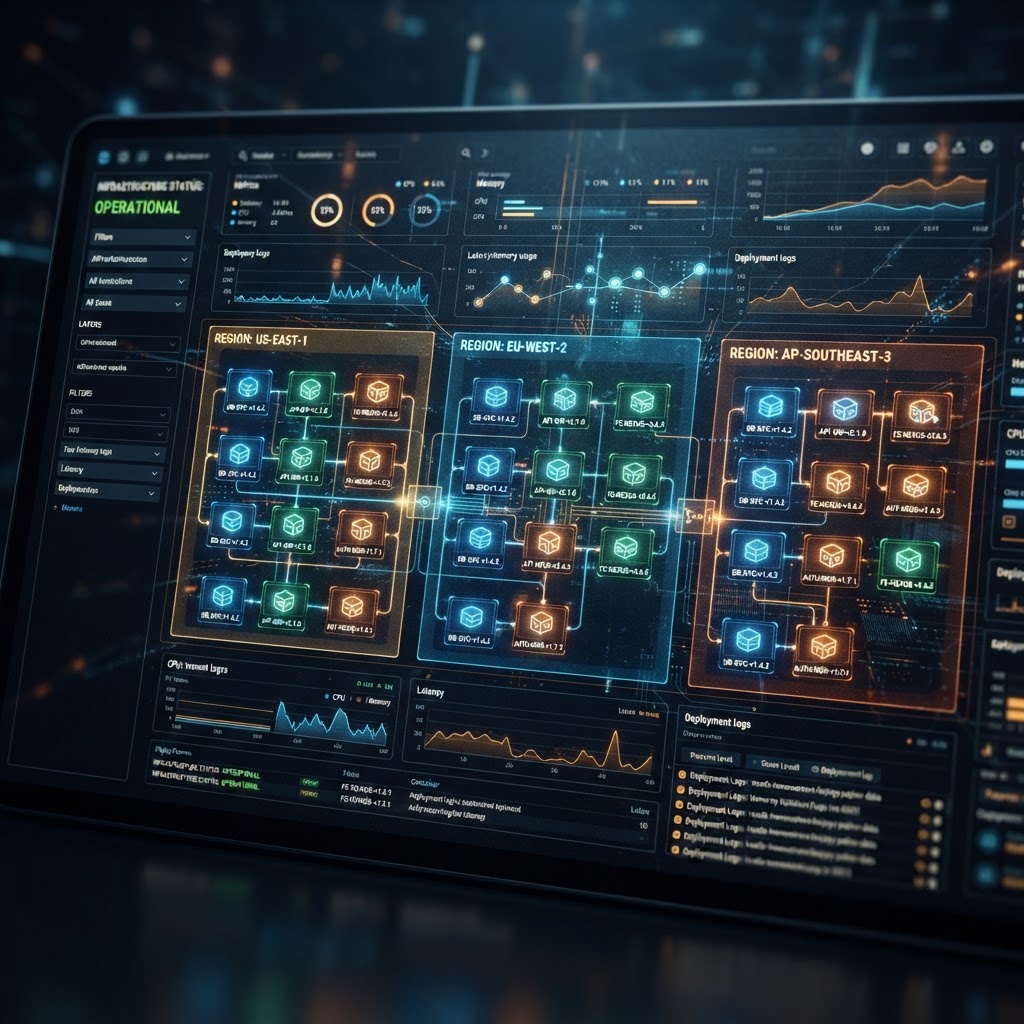
Infrastructure today is vast and fragmented. One host acting strangely is an outlier. A hundred hosts acting strangely is a systemic incident. The ability to perform grouped change detection allows engineers to apply mathematical rigor across massive datasets. Instead of looking at a single aggregated average, an SRE can partition the analysis by container ID, region, or deployment version.
When you split analysis by dimensions, you transform an abstract statistical result into an actionable list. It changes the investigation from a search for a needle in a haystack to a directed inquiry regarding which specific segments of your infrastructure are currently undergoing a structural shift. This is exactly how humans intuitively investigate problems, and the tool is finally catching up to the human workflow.
Statistics Without the Cognitive Burden
The reason many advanced detection systems fail to gain traction is that they require a level of statistical literacy that most operational staff do not have time to maintain. Explaining a p-value to a busy incident responder is often a losing battle. The key to successful adoption is not more math, but better data presentation. The interface must translate the p-value into a measure of confidence that informs the severity of the alert.
When an interface provides the time, field, and statistical significance of a change, it empowers the user to trust the machine. The division of labor here is clear: the system performs the heavy mathematical lifting, while the human performs the qualitative assessment of whether the change is expected or erroneous. This removes the mystery of the black box and replaces it with evidence.
Operationalizing the Investigation Loop
The most critical evolution in monitoring is the integration of detection directly into the case management workflow. If an anomaly is detected, it should not just sit in an alert queue. It should be attachable to a case or an investigation incident immediately. This creates a chain of custody for telemetry. When an investigation begins with a pre-populated case containing the time of the detected shift and the related metrics, the SRE is already miles ahead.
Every time an analyst has to copy and paste a timestamp or manually filter logs based on a detected anomaly, potential context is lost. By collapsing the distance between detection, retrieval, and case management, we reduce the time to resolution. Anomaly detection is not the end goal of a system. It is simply the trigger for a broader investigative process.
Preparing Telemetry for AI Agents
We are entering an era where AI agents will take on the first line of defense in incident response. However, these agents cannot be fed raw, infinite streams of telemetry. They require summarized, high-confidence events to act effectively. A detected change-point event serves as the perfect signal for an agent to initiate an automated investigation path.
If the system can tell the agent that a latency shift occurred at 14:32 with high statistical confidence, the agent can autonomously query deployment logs, check dependency health, and correlate infrastructure events from that exact moment. This transforms the detector into an agent context generator. Without this, the agent is left to perform blind searches, which leads to hallucinations and incorrect root cause analysis. Statistical detection acts as the grounding mechanism for AI reasoning.
Conclusion: From Detection to Resolution
The future of observability is not found in more sensitive algorithms or faster alert times. It is found in the architectural integration of detection into the daily workflow of the engineer. We must stop treating anomaly detection as an isolated subsystem and start treating it as the bridge between raw data and informed action. By utilizing tools that combine powerful query languages like ES|QL with intuitive investigation surfaces, we enable teams to move beyond watching charts and toward solving problems. The real value of an anomaly is not that it exists, but that it tells us exactly where to start our next investigation.