Agentic Infrastructure Emergence Marks the End of Prompt Engineering Primacy
Hackathons are shifting from simple model prompting to the development of complex, distributed agentic systems. This transition marks the maturation of AI from a chatbot curiosity into a robust layer of industrial software engineering.
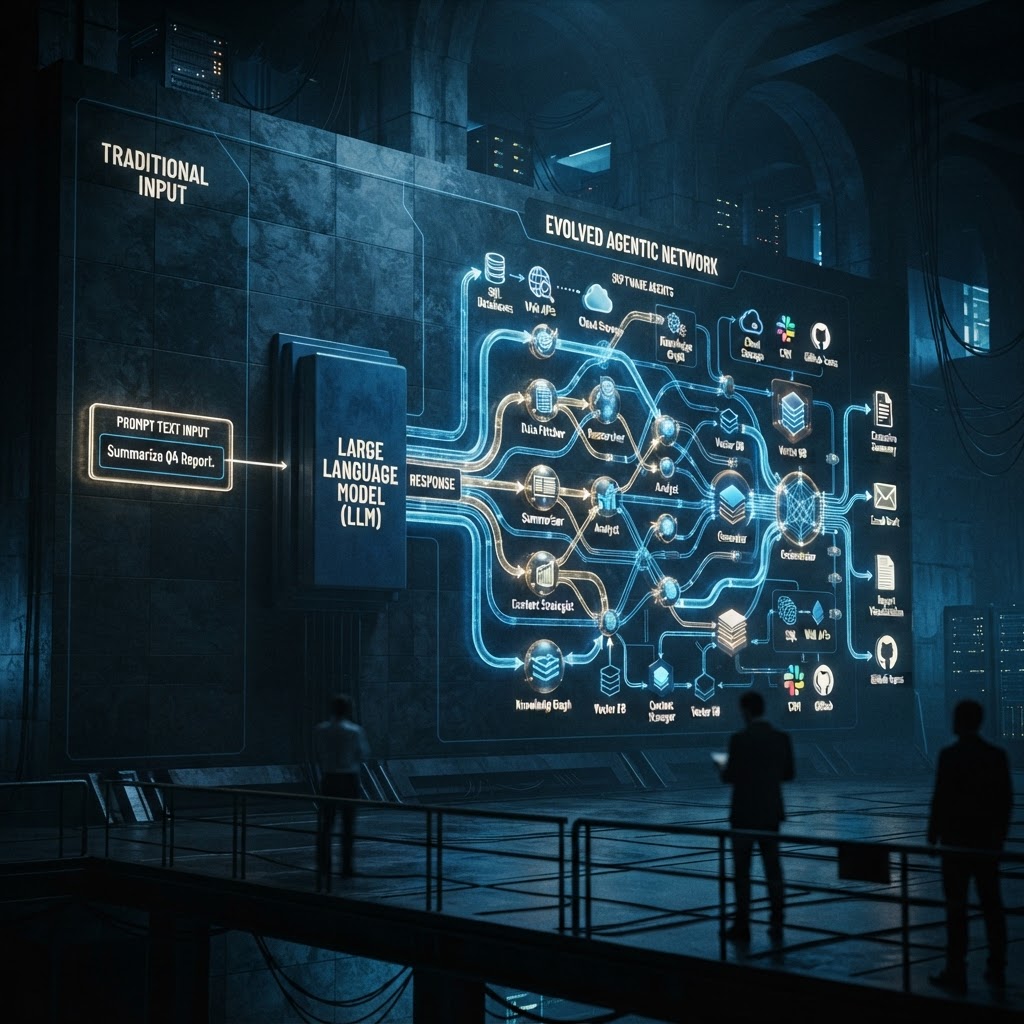
The Shift from Prompts to Systems
For the past few years, the standard narrative of generative AI was defined by the prompt. Developers treated the model as a black box where the primary challenge was perfecting a string of text to coax the desired output. This was the era of prompt engineering. However, recent observations from events like Hack the North 2026 suggest a fundamental transformation. We are moving away from treating the model as the final destination and toward treating it as a volatile processor inside a much larger, static architecture. The goal is no longer just to get an answer, but to build a reliable pipeline that generates, verifies, and executes actions.
The Infrastructure Paradox
The most sophisticated hackathon projects have largely stopped focusing on prompt optimization. Instead, they are grappling with the same problems that have plagued distributed computing for decades. How do you handle state? How do you ensure idempotent actions? How do you authorize a system to perform tasks on a user's behalf? These teams are not building better chatbots. They are building complex, multi-layered systems that incorporate retrieval, policy enforcement, and autonomous verification. The model is merely a central component, not the entire application.
Retrieval and the End of the Context Window Myth
Many developers initially believed that increasing the model context window would eliminate the need for traditional retrieval systems. The reality is the opposite. As agents attempt to perform tasks on massive datasets, dumping raw data into a prompt becomes expensive, inefficient, and prone to noise. We are seeing a return to structured retrieval architectures. The system must ingest, categorize, rank, and retrieve specific evidence before the model ever sees the information. This makes search technology more critical than ever. The intelligence of the LLM is wasted if it does not have a reliable, curated stream of context to reason over.

The Engineering of Accountability
When agents move from generating text to taking actions, the requirements for the system change drastically. An agent that simply answers a question creates a low-stakes risk profile. An agent that modifies infrastructure, handles financial transactions, or deploys code requires a new level of rigor. This is where the industry is pivoting toward platform engineering principles. Teams are implementing strict authorization boundaries, audit trails, and human-in-the-loop validation patterns. You cannot trust an agent until you have built a system that can observe its actions and halt them if they deviate from policy.
Verification as the New Guardrail
The most promising trend in current AI development is the use of deterministic verification to constrain probabilistic models. Instead of hoping an LLM is correct, developers are building harnesses that check the output against objective truth. Whether it is code optimization verified by unit tests or financial claims backed by citation retrieval, this pattern of agent proposal and system verification is becoming the gold standard for production-ready AI. The model suggests, while the code verifies.
The New AI Stack
The modern agentic stack is starting to look remarkably like a traditional service-oriented architecture. We have agents at the top, a retrieval layer for context, an orchestration layer for reasoning, a tool registry for API access, and a rigid policy layer for action validation. This architecture requires identity management, observability, and robust databases. This transition confirms that the competitive advantage in the AI space is shifting. It is no longer about who has access to the most powerful foundation model. It is about who can wrap that model in a harness that makes it useful, safe, and accountable.
Conclusion: The Maturity of AI Engineering
We are witnessing the professionalization of the AI agent. The early excitement of prompt engineering was a necessary phase, but it was not the end state. By treating agent development as an exercise in systems architecture, we are finally bridging the gap between impressive demos and reliable products. Organizations that focus on building these surrounding systems will be the ones that capture the true value of generative AI. The era of the chatbot is ending, and the era of the autonomous agentic platform has arrived.